Showing posts with label DMR MOTOTRBO. Show all posts

AOR | MOTOTRBO | DMR scanner

New Revolutionary Multi-mode Digital Voice Receiver!
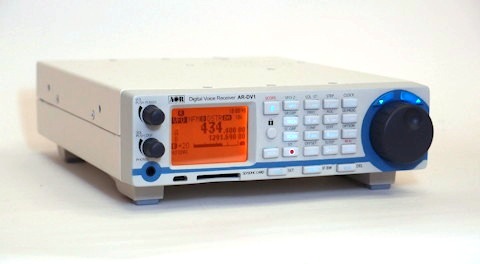
AR-DV1 digital voice receiver
AR-DV1
AOR What's new ?
http://aorusa.com/whatsnew/

The AR-DV1 is the first scanning receiver of its kind to receive and decode virtually ALL popular digital modes including:
MOTOTRBO™
DMR
dPMR™
APCO P25
NXDN™
Icom D-Star™
Digital CR
Yaesu
Kenwood®
Alinco EJ-47U
 

PLUS conventional analog signals including:
AM, wide and narrow FM, upper and lower sideband and CW modes

The AR-DV1 can be operated independently or computer controlled for easier programming and monitoring. It features:

Hytera X1e-U1 - 16C, 4W, UHF(400-470MHz) DMR Digital Two-Way Radio w/GPS

Hytera X1e-U1 - 16C, 4W, UHF(400-470MHz) DMR Digital Two-Way Radio w/GPS
http://hytera782.blogspot.com/

Product Specifications:
Model - X1e-U1
4W
UHF (400-470MHz)


Hytera X1e Series Covert Radio - Fully compliant to DMR open standard of ETSI
16 Channels
Small, rugged and covert
IP67: One-meter submersion up to30 minutes
Open USB portfacilitates secondary and application development
The built-in GPS module supports GIS applications
Integrated Bluetooth makes for seamless connection to your bluetooth headset
Dual modes (analog & digital) operation ensures a smooth analog-to-digital migration
Versatile voice calls include individual call, group call and al- call
Vibration alerts the reception of voice call and message
Multiple IP functionalities are allowed when connected with a PC via IP address
Multiple advanced analog signaling, including HDC1200, DTMF, 2-Tone and 5-Tone, provide more expansion capacity
Upgradable software enables new features without buying a new radio
Durability: passing of HALT (Highly Accelerated Life Test) and MIL-STD-810 C/D/E/F compliance

Excelvan BM-800 Condenser Microphone Cardioid Pro Audio Studio Vocal Recording Mic with Shock Mount (Black)

Excelvan BM-800 Condenser Microphone Cardioid Pro Audio Studio Vocal Recording Mic with Shock Mount (Black)

http://www.qrz.com/db/VE3CKO
VE3CKO - Callsign Lookup by QRZ.COM


Excelvan BM-800 Condenser Microphone Cardioid Pro Audio Studio Vocal Recording Mic with Shock Mount (Black)
  • Tailored frequency response provides vocal intelligibility and crispness
  • Neodymium magnet for high signal-to-noise ratio
  • Shock Mount to reduces handling noise
  • Cardiod (undirectional) pickup pattern suppresses feedback
  • Ideal for radio broadcasting studio, voice-over sound studio, recording and so on

HYTERA MD782 UHF Digital Mobile (DMR)

HYTERA MD782 Digital Mobile (DMR) UHF 400-470 MHz


HYTERA PD782G Handheld UHF Digital (DMR)

HYTERA PD782G Handheld UHF Digital
Hytera PD782G Handheld (DMR)


http://hytera782.blogspot.com/

Astatic D104 Silver Eagle Mic

Astatic D104 Silver Eagle Mic


The D-104 range of mics were first and foremost communications grade microphones. Remember that fact and say it twice.

The were not design to be recording units,but for amateur\non-critical\radio use. In that role, and coupled correctly, the D-104 is a great communications microphone. Clean, CRISP, highly intelligible audio that makes each syllable perfectly understandable.

Larry King audio... nope.....ESSB audio...nope, but if you want that, spend a ton of money or use AM or FM. SSB was designed ( and works well ) to be an efficient, narrow bandwidth mode. The audio part of it was deemed acceptable ...and still is.

I have a D-104 Silver Eagle and turn the pre-amp to only two and the TS-440S's mic gain to about 4 and it works very well. The mike gets "OOHS and AHHS" from teenage or younger visitors to my shack because it looks "so retro " or so they tell me. I have no complaints on the build quality and many cab and dispatch services used these mics ( D-104's of any flavor ) for years with millions of key and unkey actions. I used to have a pager ( remember them?) and the ladies that would relay messages used a D-104 microphone at the transmitting end.

They always had crisp, CLEAN, and understandable audio.


Used D-104's ususally need to be relubricated, and it does not hurt to resolder all contacts.Adding a electret element to replace a working UNDAMAGED original element is pure folly, and there are those that have done it. Kind of like putting a Ferrari engine in a Corolla and then hoping somehow that it will be a Ferrari.

There is NOTHING wrong with the audio of a D-104 if one remembers what it was designed to do ,AND if it is not overdriven AND is electrically and mechanically working.

Most new hams, however, have no idea of the tonal design plan that was incorporated into this mic and think it should sound like a studio mike. Then again, even experienced hams still believe that somehow, someway, SSB can become and deliver AM or FM quality audio easily. Sorry folks but theres one word preventing that.......BANDWIDTH!!
Canadian DRAM Class Action

Canadian DRAM Class Action
How every single Canadian can get a free $20, no questions asked

All you have to do is head online to The Money is Mine and fill out a simple form. ... And by the time you actually get the money (the payout on these types of ...

You (individuals, businesses and governmental entities) can get money from the settlements if you bought DRAM or electronic devices containing DRAM

CANADIAN DRAM NATIONAL CLASS ACTIONS

There are lots of things we would do with an extra 20 bucks. Break up the brown-baggin’ life and buy ourselves a fancy takeout lunch this week. Buy ourselves a swanky new top (on sale, naturally), or pay back some of those loans, perhaps?

The more we think about it, the more we believe we could stretch that amount of cash to our advantage. But with everyone leading such busy lives, who actually wants to go out of their way for $20? Here’s the good news: you don’t have to.

If you’re Canadian and you bought certain electronic devices between April 1, 1999 and June 30, 2002, you too qualify for $20 simply by asking for it.

So … what’s the catch?

Top 5 Ham Radio Transceiver Base Stations

Hams, also known as amateur or Ham radio operators, use radio transceivers to communicate with each other and provide emergency notification services. Although the continual advancement in technology has made the need of radio transceivers obsolete, many continue to use the device for the purpose of hobby. Once considered expensive equipment, ham radio transceiver base stations can now be purchased through more affordable means, making them ideal for those interested in this leisurely activity. When purchasing a ham radio transceiver base station at retailers such as eBay, buyers should consider the various types of broadcasting and familiarize themselves with the top five ranked models available based on consumer standards.

Types of Broadcasting

Ham radio transceiver base stations use either digital, analog, or a combination of both to broadcast signals. Buyers should consider the benefits and drawbacks of each as well as location when choosing the type that best suits their personal needs and wishes.

Digital Ham Radio Transceiver Base Stations

A digital ham radio transceiver base station uses digital technology, as opposed to analog. These transceivers allow for additional modes including digital radio teletype (RTTY), voice over IP (VOIP), and TCP/IP-based packet radio. Digital modes have replaced older radiotelegraphy methods. For example, RTTY has taken the place of Morse code, allowing users to communicate non-verbally over the radio. Digital ham radios also offer stronger signals and better adaptability to changing weather conditions, over that of analog ham radios. In addition, they are easier to operate and offer increased reliability to users. Digital ham radios can converse and hold multi-person conversations from various regions of the world over radio waves. They can also use signal repeaters and other tactics such as bouncing signals off the Northern Lights, to communicate with operators as far away as space. This allows astronauts occupying the International Space Station to remain in contact with those here on earth.

Analog Ham Radio Transceiver Base Stations

Analog ham radio transceiver base stations use a mechanical system. These radios offer increased stability in regards to power consumption. This is important, especially in the midst of emergencies when the ham radio needs to be able to run off the grid, with limited resources. Adding a computer to the ham radio increases power usage, which is often limited during states of emergency.

Digital and Analog Ham Radio Transceiver Base Stations

Digital and analog ham radio transceiver base stations can handle both digital and analog signals. These transceivers are ideal is regions where digital coverage is inconsistent as they ensure that there is no loss of signal. Digital and analog transceiver base stations are often more expensive because of their need to factor in additional electrical circuits.

Top Five Radio Transceiver Base Stations

With all the ham radio transceiver base stations available on the consumer market, it can be difficult deciding which models are a worthwhile investment. The following top five transceivers have received consistent positive reviews and have gain popularity based on their high performance standards and ease of use.